
A machine just signed your chart. You didn't get a say. But you could get the lawsuit.
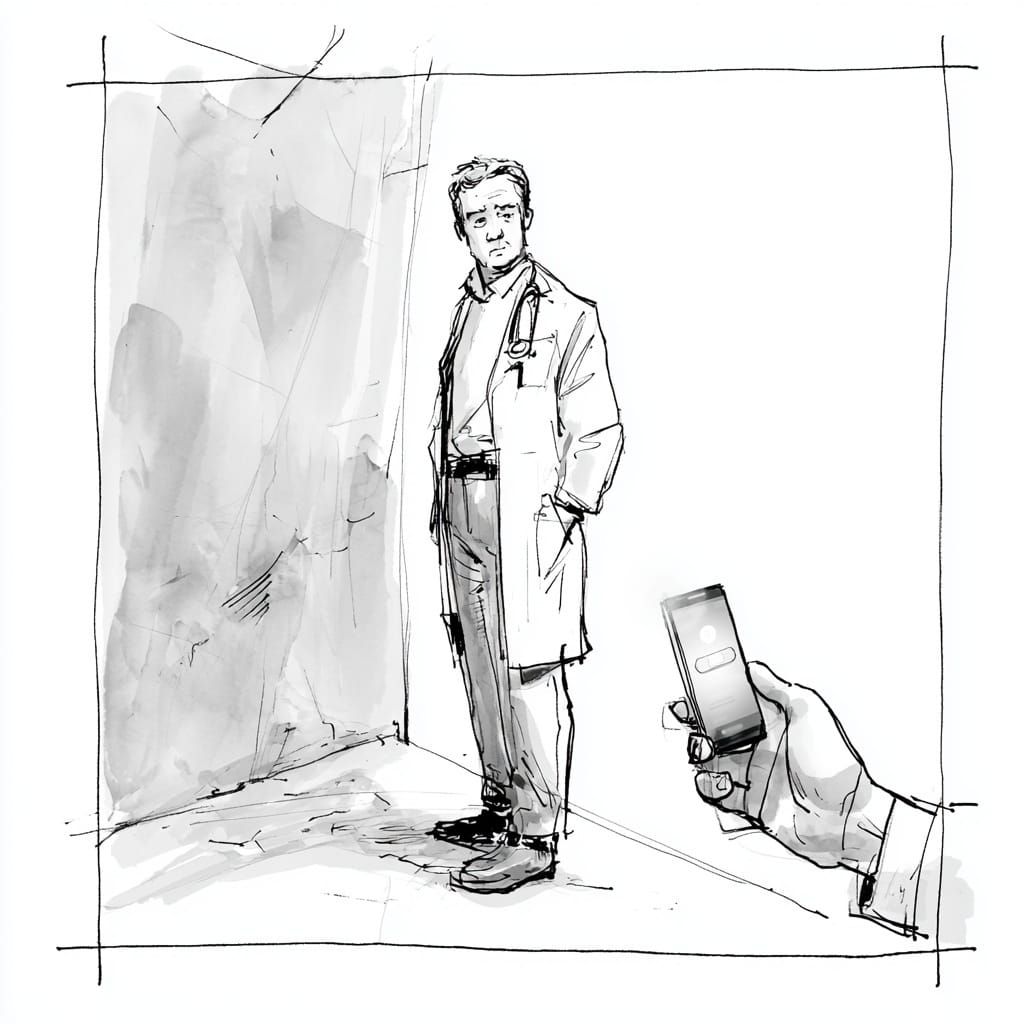
81% of doctors now use AI every week.
Double where we were two years ago.
Two and a half tools each. Cleveland Clinic put AI scribes in front of 4,000 clinicians in four months flat.
And fewer than 1 in 4 health systems have any formal governance for what happens next.
Nobody read you the fine print.
Here's the part they don't say out loud: Your hospital may have bought the tool. Set it loose and might have inadvertently handed you the risk.
If the scribe drops one decimal. If the triage score is wrong. If the model misses what a second-year resident would've caught; that's your signature on the chart.
Not the algorithm's.
Automatically.
You didn't go to medical school to rubber-stamp a black box. You became a physician to know.
And every "AI-assisted" workflow now asks you to vouch for a machine you can't explain and to absorb the blame when it's wrong.
So the question was never really "should you use AI." It's this:
Does the tool augment your judgment — or quietly replace it?
Augment it, it's a tool. You stay accountable, and you keep the authority to say no.
Replace it, and it's not a tool anymore. It's a decision-maker wearing your liability without one.
You can't sue an algorithm.
But they can sure sue you.
Three things you're owed before you ever sign off on a machine:
1.) A real override. If your "no" doesn't stick, you're not supervising — you're notarizing.
2.) An explanation you can verify. "The model scored it high" is not a clinical rationale. It's a shrug with extra steps.
3.) A name on the line that isn't yours. When it's wrong, who owns it? If the answer is "nobody," the answer is you.
Essential progress. Wrong layer.
Right instinct. Wrong layer.
The AI didn't remove the human. It just moved you: from the one who decides to the one who absorbs.
Doctors aren't anti-AI. They're anti-being-asked-to-vouch-for-machines-they-can't-override.
Here's the thing, though: you're not the victim of this system.
You are the governance, whether they put it on an org chart or not.
When the algorithm gets it wrong, does your institution back you or point at the chart?
Because the oversight gap won't close itself. And you're the only one at the bedside when it opens.